Whole-home filtration · Maryland's Eastern Shore

Water filtration in Queen Anne's County, Maryland

What Centreville, Stevensville, Grasonville and the county's other utilities report, what private wells show, and what it means for your home. One system at the main treats every tap, with no salt, no power and no drain line.

The short answer

Queen Anne's County stretches from the Kent Island shoreline to farm country around Centreville and Sudlersville. The eight town and community systems we read all draw groundwater, and seven name their aquifer: Aquia, Upper Patapsco, Lower Patapsco or Magothy. Four of the County Sanitary District's reports say the water periodically carries iron that turns it brown. Disinfection byproducts stay under their limits in the systems that report them. Stevensville's TTHM ranges up to 60.4 ppb, Oyster Cove's is 46.6 ppb (one sample) and Centreville's averages 41 ppb, the highest we read.

On private wells, USGS sampling found nitrate above the legal limit in 47.1% of results, iron above the guideline in 46.6%, manganese in 52.1% and high chloride in 24.9%. Hard water is less common here. Only a test of your own tap or well shows what is in your water.

Sources: 2025 water quality reports (published 2026), as printed by each utility. Read 2026-11-07 from the MDE copies. USGS Water Quality Portal for private wells.

Common problems

Three things people notice in Queen Anne's County

Town water

Brown water and iron

The County Sanitary District's reports for Stevensville, Grasonville, Prospect Bay and Oyster Cove each say the system periodically has iron issues. The utility calls it an inconvenience, not a health concern, and it stains sinks, tubs and laundry. Read about iron.

Private wells

Iron and manganese

USGS sampling of Queen Anne's County wells found iron above the guideline in 46.6% of results and manganese in 52.1%. A well needs a different build than a town connection. See the well system.

Private wells

Nitrate and salt: test first

Nitrate was above the legal limit in 47.1% of USGS results, and chloride above 250 mg/L in 24.9%, which can point to salt influence near tidal water. Pure Way has add-ons that take care of nitrate, chloride or sodium, and a test comes first.

What it does to a home

Four numbers worth knowing

47.1%

Well nitrate

Share of Queen Anne's County well results above the 10 mg/L limit. Infants are the main concern with nitrate.

46.6%

Well iron

Share of results above the 0.3 mg/L guideline. Iron is what stains sinks, tubs and laundry orange or brown.

52.1%

Well manganese

Share of results above the 0.05 mg/L guideline. Manganese leaves dark brown or black stains.

24.9%

High chloride

Share of well results above 250 mg/L, a common sign of salt influence near tidal water.

Sources: USGS Water Quality Portal (Queen Anne's County wells, 1990 to 2023).

The public record

What Queen Anne's County utilities report

2025 water quality reports (published 2026), as printed by each utility. Read 2026-11-07 from the MDE copies. Legal limits: chlorine 4 ppm, total trihalomethanes (TTHM) 80 ppb, haloacetic acids (HAA5) 60 ppb, arsenic 10 ppb, nitrate 10 ppm.

How to read this table
  • Each card is one utility. "What it found" is what its own 2025 report printed. "Legal limit" is the most the law allows. "Compared" tells you which side of the limit the result falls on. Yellow means the result is under the limit but at or above 75% of it.
  • ppm and ppb are tiny amounts. One ppm is one drop in about 13 gallons, and one ppb is a thousand times smaller. Lower is better for most items.
  • Chlorine is added to kill germs. TTHM and HAA5 are byproducts that form when that chlorine meets natural material in the water. Their limits are judged on a yearly average, so one high sample does not break the limit.
  • If a number is missing, we could not read it cleanly, so the card sends you to the utility's own PDF instead of guessing.

Town of Centreville

Town wells in the Aquia formation

Full report (PDF) · Read the full Centreville page

Centreville's report prints one result that needs a note. Everything else we read is under its legal limit. 3 results are above EWG's stricter health guideline, which is a third-party benchmark and not a legal limit.

8results compared to a limit
3above an EWG health guideline
0over a legal limit
0not detected

Above EWG's health guideline

Each bar counts how many times the result is above EWG's guideline, on a scale that grows tenfold at each tick. The dashed line marks the legal limit on the same scale.

Arsenic

10.2 ppb (2023 average, as printed) measured · 0.004 ppb EWG guideline · 10 ppb legal limit · 102% of the legal limit

2,550×the EWG guideline

Above the EWG guidelinePrinted just above the legal limit, see note

guideline10×100×1,000×10,000×

TTHM (chlorine byproduct)

41 ppb average measured · 0.15 ppb EWG guideline · 80 ppb legal limit · 51% of the legal limit

273×the EWG guideline

Above the EWG guideline

guideline10×100×1,000×10,000×

HAA5 (chlorine byproduct)

5 ppb average measured · 0.1 ppb EWG guideline · 60 ppb legal limit · 8% of the legal limit

50×the EWG guideline

Above the EWG guideline

guideline10×100×1,000×10,000×

Closest to a legal limit

Arsenic

10.2 ppb (2023 average, as printed) against a limit of 10 ppb

102%of the limit

See notePrinted just above the limit. The violation column says N and the Town states the water meets EPA's arsenic standard.

TTHM (chlorine byproduct)

41 ppb average against a limit of 80 ppb

51%of the limit

Under the limit

Gross beta radiation

10.4 pCi/L (2024) against a limit of 50 pCi/L

21%of the limit

Under the limit

See every result we read (9)

Chlorine (disinfectant)

0.6 ppm highest against a limit of 4 ppm

15%of the limit

Under the limit

TTHM (chlorine byproduct)

41 ppb average against a limit of 80 ppb

51%of the limit

Under the limit

HAA5 (chlorine byproduct)

5 ppb average against a limit of 60 ppb

8%of the limit

Under the limit

Arsenic

10.2 ppb (2023 average, as printed) against a limit of 10 ppb

102%of the limit

See notePrinted just above the limit. The violation column says N and the Town states the water meets EPA's arsenic standard.

Barium

0.108 to 0.148 ppm against a limit of 2 ppm

7%of the limit

Under the limit

Copper (90th percentile at homes)

0.142 ppm (2024) against a limit of 1.3 ppm (action level)

11%of the limit

Under the limit

Lead (homes tested)

None over the action level (2024) against a limit of 15 ppb (action level)

Under the limit

Radium-228

0.2 pCi/L (2021) against a limit of 5 pCi/L (combined radium)

4%of the limit

Under the limit

Gross beta radiation

10.4 pCi/L (2024) against a limit of 50 pCi/L

21%of the limit

Under the limit

Town of Queenstown

Town wells (the report's aquifer sentence reads like template text, so we do not repeat it)

Full report (PDF)

Every result we read in Town of Queenstown's report is under its legal limit. The closest is TTHM at 14% of its limit. One result is above EWG's stricter health guideline, which is a third-party benchmark and not a legal limit.

3results compared to a limit
1above an EWG health guideline
0over a legal limit
1not detected

Above EWG's health guideline

Each bar counts how many times the result is above EWG's guideline, on a scale that grows tenfold at each tick. The dashed line marks the legal limit on the same scale.

TTHM (chlorine byproduct)

11 ppb running average measured · 0.15 ppb EWG guideline · 80 ppb legal limit · 14% of the legal limit

73×the EWG guideline

Above the EWG guideline

guideline10×100×1,000×10,000×

Closest to a legal limit

TTHM (chlorine byproduct)

11 ppb running average against a limit of 80 ppb

14%of the limit

Under the limit

Barium

0.16 ppm against a limit of 2 ppm

8%of the limit

Under the limit

See every result we read (3)

TTHM (chlorine byproduct)

11 ppb running average against a limit of 80 ppb

14%of the limit

Under the limit

Lead (90th percentile at homes)

Not detected (2021 to 2024) against a limit of 15 ppb (action level)

0%of the limit

Under the limit

Barium

0.16 ppm against a limit of 2 ppm

8%of the limit

Under the limit

Chlorine is left out because the report contradicts itself.

Stevensville system (Queen Anne's County Sanitary District)

Six treatment facilities drawing from four aquifers (Lower Patapsco, Upper Patapsco, Aquia and Magothy), wells 280 to 1,590 ft deep

Full report (PDF) · Read the full Stevensville system (Queen Anne's County Sanitary District) page

Every result we read in Stevensville's report is under its legal limit. The closest is TTHM at 76% of its limit. 3 results are above EWG's stricter health guideline, which is a third-party benchmark and not a legal limit.

11results compared to a limit
3above an EWG health guideline
0over a legal limit
3not detected

Above EWG's health guideline

Each bar counts how many times the result is above EWG's guideline, on a scale that grows tenfold at each tick. The dashed line marks the legal limit on the same scale.

Arsenic

0 to 2 ppb measured · 0.004 ppb EWG guideline · 10 ppb legal limit · 20% of the legal limit

500×the EWG guideline

Above the EWG guideline

guideline10×100×1,000×10,000×

HAA5 (chlorine byproduct)

14 to 42 ppb (2025) measured · 0.1 ppb EWG guideline · 60 ppb legal limit · 70% of the legal limit

420×the EWG guideline

Above the EWG guideline

guideline10×100×1,000×10,000×

TTHM (chlorine byproduct)

31 to 60.4 ppb (2025) measured · 0.15 ppb EWG guideline · 80 ppb legal limit · 76% of the legal limit

403×the EWG guideline

Above the EWG guidelineClose to the legal limit

guideline10×100×1,000×10,000×

Closest to a legal limit

TTHM (chlorine byproduct)

31 to 60.4 ppb (2025) against a limit of 80 ppb

76%of the limit

Close to the limitUnder the limit, but at or above 75% of it.

HAA5 (chlorine byproduct)

14 to 42 ppb (2025) against a limit of 60 ppb

70%of the limit

Under the limit

Chlorine (disinfectant)

0.8 to 1 ppm against a limit of 4 ppm

25%of the limit

Under the limit

See every result we read (14)

Chlorine (disinfectant)

0.8 to 1 ppm against a limit of 4 ppm

25%of the limit

Under the limit

TTHM (chlorine byproduct)

31 to 60.4 ppb (2025) against a limit of 80 ppb

76%of the limit

Close to the limitUnder the limit, but at or above 75% of it.

HAA5 (chlorine byproduct)

14 to 42 ppb (2025) against a limit of 60 ppb

70%of the limit

Under the limit

Arsenic

0 to 2 ppb against a limit of 10 ppb

20%of the limit

Under the limit

Nitrate

Not detected (under 1 mg/L, July 2025) against a limit of 10 ppm

0%of the limit

Under the limit

Lead (90th percentile at homes)

Not detected (under 5 ppb, 0 homes over, 2024) against a limit of 15 ppb (action level)

0%of the limit

Under the limit

Copper (90th percentile at homes)

65.7 ppb (0 homes over, 2024) against a limit of 1,300 ppb (action level)

5%of the limit

Under the limit

Barium

0 to 302 ppb against a limit of 2,000 ppb

15%of the limit

Under the limit

Fluoride

0 to 0.19 ppm against a limit of 4 ppm

5%of the limit

Under the limit

Radium

Under 1 pCi/L against a limit of 5 pCi/L (radium combined)

Under the limit

Gross alpha radiation

Under 3 pCi/L against a limit of 15 pCi/L

Under the limit

Gross beta radiation

0 to 7.2 pCi/L against a limit of 50 pCi/L

14%of the limit

Under the limit

PFAS (every well, tested by MDE December 16, 2021)

Not detected against a limit of 4 ppt (PFOA and PFOS)

0%of the limit

Not detected

Sodium

23 ppm against a limit of No limit set

No legal limit

The report prints the same results in the column for each of its six facilities (Stevensville, Business Park, Thompson Creek, Bayside, Queen's Landing and Bridgepointe), so we show them once. It says the system periodically has iron issues (brown water), which the utility calls an inconvenience, not a health concern.

Grasonville

Two wells 950 ft deep in the Upper Patapsco aquifer

Full report (PDF) · Read the full Grasonville page

Every result we read in Grasonville's report is under its legal limit. The closest is chlorine at 40% of its limit. One result is above EWG's stricter health guideline, which is a third-party benchmark and not a legal limit.

4results compared to a limit
1above an EWG health guideline
0over a legal limit
2not detected

Above EWG's health guideline

Each bar counts how many times the result is above EWG's guideline, on a scale that grows tenfold at each tick. The dashed line marks the legal limit on the same scale.

TTHM (chlorine byproduct)

3.8 to 5.4 ppb measured · 0.15 ppb EWG guideline · 80 ppb legal limit · 7% of the legal limit

36×the EWG guideline

Above the EWG guideline

guideline10×100×1,000×10,000×

Closest to a legal limit

Chlorine (disinfectant)

1.2 to 1.6 ppm against a limit of 4 ppm

40%of the limit

Under the limit

TTHM (chlorine byproduct)

3.8 to 5.4 ppb against a limit of 80 ppb

7%of the limit

Under the limit

See every result we read (6)

Chlorine (disinfectant)

1.2 to 1.6 ppm against a limit of 4 ppm

40%of the limit

Under the limit

TTHM (chlorine byproduct)

3.8 to 5.4 ppb against a limit of 80 ppb

7%of the limit

Under the limit

HAA5 (chlorine byproduct)

0 ppb against a limit of 60 ppb

0%of the limit

Under the limit

Nitrate

Under 1 ppm against a limit of 10 ppm

Under the limit

Lead (90th percentile at homes)

Not detected against a limit of 15 ppb (action level)

0%of the limit

Under the limit

Sodium

40 ppm against a limit of No limit set

No legal limit

The report says the system periodically has iron issues (brown water). The utility calls it an inconvenience, not a health concern.

Prospect Bay

Two wells 360 ft deep in the Aquia Greensand aquifer

Full report (PDF) · Read the full Prospect Bay page

Every result we read in Prospect Bay's report is under its legal limit. The closest is arsenic at 51% of its limit. 3 results are above EWG's stricter health guideline, which is a third-party benchmark and not a legal limit.

5results compared to a limit
3above an EWG health guideline
0over a legal limit
0not detected

Above EWG's health guideline

Each bar counts how many times the result is above EWG's guideline, on a scale that grows tenfold at each tick. The dashed line marks the legal limit on the same scale.

Arsenic

0 to 5.1 ppb (tested four times in 2025) measured · 0.004 ppb EWG guideline · 10 ppb legal limit · 51% of the legal limit

1,275×the EWG guideline

Above the EWG guideline

guideline10×100×1,000×10,000×

TTHM (chlorine byproduct)

9.2 ppb measured · 0.15 ppb EWG guideline · 80 ppb legal limit · 12% of the legal limit

61×the EWG guideline

Above the EWG guideline

guideline10×100×1,000×10,000×

HAA5 (chlorine byproduct)

3.22 ppb measured · 0.1 ppb EWG guideline · 60 ppb legal limit · 5% of the legal limit

32×the EWG guideline

Above the EWG guideline

guideline10×100×1,000×10,000×

Closest to a legal limit

Arsenic

0 to 5.1 ppb (tested four times in 2025) against a limit of 10 ppb

51%of the limit

Under the limit

Chlorine (disinfectant)

1.2 to 1.5 ppm against a limit of 4 ppm

38%of the limit

Under the limit

Fluoride

0.891 ppm against a limit of 4 ppm

22%of the limit

Under the limit

See every result we read (6)

Chlorine (disinfectant)

1.2 to 1.5 ppm against a limit of 4 ppm

38%of the limit

Under the limit

TTHM (chlorine byproduct)

9.2 ppb against a limit of 80 ppb

12%of the limit

Under the limit

HAA5 (chlorine byproduct)

3.22 ppb against a limit of 60 ppb

5%of the limit

Under the limit

Arsenic

0 to 5.1 ppb (tested four times in 2025) against a limit of 10 ppb

51%of the limit

Under the limit

Fluoride

0.891 ppm against a limit of 4 ppm

22%of the limit

Under the limit

Sodium

33 ppm against a limit of No limit set

No legal limit

The report says the system periodically has iron issues (brown water). The utility calls it an inconvenience, not a health concern.

Oyster Cove

Two wells 250 ft deep in the Aquia Greensand aquifer

Full report (PDF) · Read the full Oyster Cove page

Every result we read in Oyster Cove's report is under its legal limit. The closest is TTHM at 58% of its limit. 2 results are above EWG's stricter health guideline, which is a third-party benchmark and not a legal limit.

4results compared to a limit
2above an EWG health guideline
0over a legal limit
0not detected

Above EWG's health guideline

Each bar counts how many times the result is above EWG's guideline, on a scale that grows tenfold at each tick. The dashed line marks the legal limit on the same scale.

TTHM (chlorine byproduct)

46.6 ppb (one sample, August 2025) measured · 0.15 ppb EWG guideline · 80 ppb legal limit · 58% of the legal limit

311×the EWG guideline

Above the EWG guideline

guideline10×100×1,000×10,000×

HAA5 (chlorine byproduct)

9 ppb (one sample) measured · 0.1 ppb EWG guideline · 60 ppb legal limit · 15% of the legal limit

90×the EWG guideline

Above the EWG guideline

guideline10×100×1,000×10,000×

Closest to a legal limit

TTHM (chlorine byproduct)

46.6 ppb (one sample, August 2025) against a limit of 80 ppb

58%of the limit

Under the limit

Chlorine (disinfectant)

1.2 ppm against a limit of 4 ppm

30%of the limit

Under the limit

HAA5 (chlorine byproduct)

9 ppb (one sample) against a limit of 60 ppb

15%of the limit

Under the limit

See every result we read (5)

Chlorine (disinfectant)

1.2 ppm against a limit of 4 ppm

30%of the limit

Under the limit

TTHM (chlorine byproduct)

46.6 ppb (one sample, August 2025) against a limit of 80 ppb

58%of the limit

Under the limit

HAA5 (chlorine byproduct)

9 ppb (one sample) against a limit of 60 ppb

15%of the limit

Under the limit

Fluoride

0.31 ppm against a limit of 4 ppm

8%of the limit

Under the limit

Sodium

41 ppm against a limit of No limit set

No legal limit

The report says the system periodically has iron issues (brown water). The utility calls it an inconvenience, not a health concern.

Bayview at Kent Narrows

One well in the Aquia aquifer

Full report (PDF)

Every result we read in Bayview at Kent Narrows' report is under its legal limit. The closest is arsenic at 53% of its limit. One result is above EWG's stricter health guideline, which is a third-party benchmark and not a legal limit.

4results compared to a limit
1above an EWG health guideline
0over a legal limit
0not detected

Above EWG's health guideline

Each bar counts how many times the result is above EWG's guideline, on a scale that grows tenfold at each tick. The dashed line marks the legal limit on the same scale.

Arsenic

5.3 ppb measured · 0.004 ppb EWG guideline · 10 ppb legal limit · 53% of the legal limit

1,325×the EWG guideline

Above the EWG guideline

guideline10×100×1,000×10,000×

Closest to a legal limit

Arsenic

5.3 ppb against a limit of 10 ppb

53%of the limit

Under the limit

Chlorine (disinfectant)

1.1 ppm highest against a limit of 4 ppm

28%of the limit

Under the limit

Fluoride

0.7 ppm against a limit of 4 ppm

18%of the limit

Under the limit

See every result we read (4)

Chlorine (disinfectant)

1.1 ppm highest against a limit of 4 ppm

28%of the limit

Under the limit

Arsenic

5.3 ppb against a limit of 10 ppb

53%of the limit

Under the limit

Chromium

4.5 ppb against a limit of 100 ppb

5%of the limit

Under the limit

Fluoride

0.7 ppm against a limit of 4 ppm

18%of the limit

Under the limit

Town of Sudlersville

Two wells in the Aquia aquifer

Full report (PDF)

Every result we read in Town of Sudlersville's report is under its legal limit.

1results compared to a limit
0above an EWG health guideline
0over a legal limit
1not detected
See every result we read (1)

PFAS (wells tested by MDE, 2022)

Not detected against a limit of 4 ppt (PFOA and PFOS)

0%of the limit

Not detected

The report's results table did not read cleanly, so open the PDF for the numbers.

Arsenic in Centreville

Centreville's report prints its arsenic result as a 2023 average of 10.2 ppb, with a range of 0 to 10.2 and a limit of 10 ppb. The violation column says N, the Town states that the water meets EPA's arsenic standard, and it tests quarterly. We show the number as printed and have not seen a newer one. Prospect Bay (0 to 5.1 ppb) and Bayview at Kent Narrows (5.3 ppb) also report arsenic under the limit. The Town's office at 410-758-1180 can tell you the latest result.

Lead service line and lead and copper notices

Three reports list violations that are about paperwork. Centreville lists a lead consumer notice violation for January 1 to February 28, 2025, and says it submitted its service line inventory by the October 16, 2024 deadline. Bayview at Kent Narrows submitted its inventory on February 8, 2025, after the deadline. Queenstown's report says its inventory had not been submitted as of May 2025, and lists missed tap monitoring from October 1, 2024 and a late lead consumer notice, both ending May 5, 2025. Queenstown's lead results (2021 to 2024) were not detected, with no sites over the action level. None of these violations is a lead result.

The Maryland Department of the Environment lists 14 community water systems in the county. We show the eight we have 2025 reports for, and the others have reports on the MDE site.

DRAFT: Stevensville's table was read from a rotated image, and its six facility columns print identical values. The Sudlersville report is a scan whose result table did not read cleanly, so its chlorine and byproduct figures still need a clean read. Queenstown's chlorine cell is internally inconsistent in the report, so it is left out. Hardness is not printed in these reports.
Private wells

If you are on a private well in Queen Anne's County

Homes outside the town and community systems often use private wells. These are results from wells USGS has sampled across the county, including some monitoring wells in farm areas. They show the range across the county. Your well may differ.

How to read this table
  • Each row asks one question: how many of the water tests from this county's wells went past a guideline? A result such as "40% of results" means about 40 out of every 100 tests.
  • Guidelines for iron, manganese and chloride are about stains, taste and pipes. The limits for nitrate and arsenic are about health.
  • mg/L and ug/L are tiny amounts. A mg/L is one ppm, and a ug/L is one ppb.
  • These are tests from a mix of wells over many years. They show the county's pattern, not your well.

In Queen Anne's County wells, the most common findings are manganese (52 in 100 tests) and nitrate (47 in 100 tests). For health limits, nitrate was over its limit in 47 in 100 tests and arsenic was over its limit in 14 in 100 tests (a small sample).

8things checked
1found in half of tests or more
6found in 1 in 10 to 1 in 2 tests
1found in fewer than 1 in 10

Each bar shows how many of the water tests from Queen Anne's County wells went past the guideline or limit. The ticks mark 1 in 4, 1 in 2 and 3 in 4. These are tests from a mix of wells over many years, not a rate for your home.

Manganese

Causes dark brown or black stains.

52in 100 tests above the 0.05 mg/L guideline

Stains, taste or pipes

none1 in 41 in 23 in 4all

52.1% of results. Based on 165 tests at 75 wells.

Nitrate

A health limit. It matters most for infants under six months.

47in 100 tests above the 10 mg/L legal limit

Health limit

none1 in 41 in 23 in 4all

47.1% of results (median 9.4 mg/L). Based on 121 tests at 43 wells.

Iron

Causes orange or brown stains and a metal taste.

47in 100 tests above the 0.3 mg/L guideline

Stains, taste or pipes

none1 in 41 in 23 in 4all

46.6% of results (35.3% were above 1 mg/L). Based on 116 tests at 68 wells (1990 to 2015).

Salt (chloride)

Gives a salty taste and can corrode pipes.

25in 100 tests above the 250 mg/L guideline

Stains, taste or pipes

none1 in 41 in 23 in 4all

24.9% of results (median 20 mg/L). Based on 2,012 tests at 110 wells.

Acidic water (low pH)

Can corrode pipes and leave blue-green stains.

14in 100 tests with a pH below 6.5

Stains, taste or pipes

none1 in 41 in 23 in 4all

13.5% of results (median pH 7.5). Based on 2,373 tests at 134 wells.

Arsenic

A health limit set for drinking water.

14in 100 tests above the 10 ug/L legal limit

Health limitSmall sample

none1 in 41 in 23 in 4all

13.5% of results. Based on 37 tests at 35 wells (1990 to 2013). Too few tests to call a county rate, which is a good reason to test your own well.

Hard water

Leaves scale on heaters, fixtures and glass.

13in 100 tests hard or harder (over 7 grains per gallon)

Hardness

none1 in 41 in 23 in 4all

Median 3.8 grains per gallon; 13.4% hard or harder (over 7 gpg); 1.5% very hard (over 10.5 gpg). Based on 134 tests at 68 wells.

Sodium

Adds a salty taste and matters on a low-sodium diet.

4in 100 tests above 100 mg/L

Stains, taste or pipes

none1 in 41 in 23 in 4all

4.4% of results. Based on 135 tests at 69 wells.

Source: USGS Water Quality Portal, Queen Anne's County wells sampled 1990 to 2023. Maryland tests a private well only when it is built, so the only way to know your own well is to test it.

Drinking water

If your well water is acidic

In USGS sampling of Queen Anne's County wells, 13.5% of results had a pH below 6.5. Pure Way Vital is our answer at the drinking tap. It goes under the sink on the cold water line, with no drilling and no extra faucet. Its Vital Balance stage neutralizes acidic water and adds minerals including calcium and magnesium. In Pure Way's measured performance, pH rises by about 2 points, with roughly 50 TDS of added natural minerals and a neutral ORP. The result is mineral-based drinking water at a normal to alkaline pH, not extreme pH levels or chemical manipulation.

Vital comes in two versions. DUO (Chem Guard and Vital Balance) adds to a home that already has the whole-house system. TRIO (Nano Armor, Chem Guard and Vital Balance) is a stand-alone under-sink system. Neither needs electricity, tanks or pressurization.

Vital treats the drinking water at one faucet. It does not treat the whole house, so it does not change the water reaching your pipes, water heater or fixtures. Figures are approximate and come from Pure Way's Vital product literature. Results vary with your source water.
One system

From the main to every tap

The Pure Way system goes in where the water main enters your house. Three housings, in order, and every tap gets the same filtered water. No salt, no power, no drain line.

DRAFT: the animated stage tour and the stage carousel go here. They are built as shared components, once, and reused on every page.
Stage 1

Pure Shield

A pleated cartridge that catches sediment, rust flakes and charged particles first, so they never reach the finer stages. Its Siliphos media is designed to condition calcium and magnesium so they stay dissolved and less reactive. The minerals stay in your water, and no salt or added sodium is involved.

Stage 2

Nano Armor

A physical barrier with pores measured in nanometers. It holds ultra-fine particles that slipped past stage one, and it keeps flow strong because it does not have the pressure drop of a membrane system.

Stage 3

Chem Guard

Specialty activated carbon that works on chlorine, chloramine and the disinfection byproducts that affect taste and smell. It also supports reducing lead. This is the stage where most people notice the change at the tap.

Each housing holds one cartridge. They last between 18 and 36 months, depending on water usage and quality. You can change them yourself, or we can come out and do it for a service fee. Well water usually needs extra components first, such as a sediment screen or an iron filter. See the well build. Select components are certified by IAPMO R&T to NSF/ANSI 42, 61 and 372. Pure Way is not the certification holder. Actual performance varies with source water, installation, flow rate and maintenance.

Does my softener already do this?

A salt softener and a Pure Way system handle scale differently

A softener is built for one thing: hardness. Queen Anne's County wells are mostly soft, so hardness is rarely the main issue. The table shows what a softener does not cover.

What it doesSalt softenerPure Way municipal system
Hard water scaleRemoves hardness minerals by swapping them for sodiumStrong anti-scale and softening-type effect: the media bonds with the minerals so they cling less to pipes, fixtures and heaters
MineralsSwapped for sodiumStay in the water, conditioned. Not every mineral is removed
Chlorine taste and odorNot what it is built for99.1% reduced in lab testing
ChloramineNot what it is built for99.6% reduced
Disinfection byproducts (THMs, HAA5, HAA9)Not what it is built forTHMs 99.93% or more, HAAs 98.7% or more
PFOA, PFOS and four other PFASNot what it is built for99.3% or more reduced
LeadNot what it is built for99.92% or more reduced

Pure Way figures are independent laboratory challenge results for the municipal three-stage system, measured early in the filter's life (BCS Laboratories, March to May 2026). They are not a guarantee for any home. Read the full table and fine print on the lab results page.

What to expect from a Pure Way system

A Pure Way system is not a true, salt-based softener, and it does not strip every mineral out of the water the way one does. It was built to handle scale a different way, and on town water it has strong softening properties. It does not remove everything, though: on town water the three-stage system on its own does not remove sodium, fluoride, iron, manganese, nitrate or arsenic, and we have add-ons that take care of any of them. Iron, manganese, salt and nitrate on a private well usually call for a different build than the municipal system. Results vary with your source water, installation and upkeep.

What an install looks like

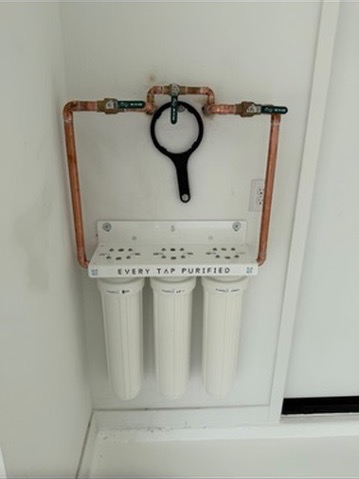
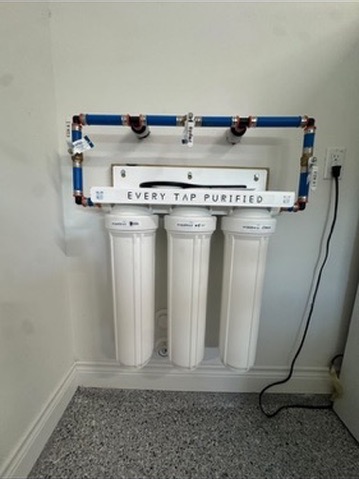
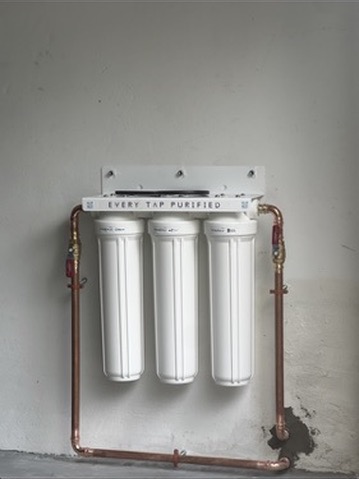
Three housings on one wall

DRAFT: these photos are small and not from the Eastern Shore. Higher-resolution originals and local installs are better, and an owner photo with a short intro belongs here too.
Local

The local Pure Way distributor

Pure Way Eastern Shore serves Talbot, Dorchester, Caroline, Queen Anne's, Wicomico and Worcester counties. We do not run a storefront. We come to your home, test your water and, if you decide to go ahead, install the system and handle the cartridge changes.

Queen Anne's County runs from Kent Island to the farms around Centreville, and we serve homes across the county, including Stevensville, Chester, Grasonville, Queenstown, Centreville, Sudlersville and Church Hill. Don't see your town? Call (410) 431-0822 and we will tell you whether we can reach you.

  1. Check your water. Read the numbers on this page, or call and we will tell you what your water source is.
  2. Book a free test. We test the water at your kitchen tap. For wells, we take a sample to a certified lab and walk you through the report.
  3. Decide with the readings in hand. No obligation, and no pressure to buy.
Free water test

See what is in your water before you decide anything.

We test the water at your tap, in your home, at no cost. Tell us where you are and what kind of water you have, and we will call you to set a time. No obligation.

Rather talk now? Call (410) 431-0822.

Step 1 of 3

What is your ZIP code?

Questions

Queen Anne's County water questions

Is Centreville water safe to drink?

Centreville's 2025 report lists its water source as the Aquia formation and shows total trihalomethanes at a 41 ppb average against an 80 ppb limit. The report prints its arsenic result as a 2023 average of 10.2 ppb against a 10 ppb limit, with the violation column marked N, and the Town states that the water meets EPA's arsenic standard. It also lists a lead consumer notice paperwork violation for January and February 2025. Call the Town at 410-758-1180 with questions about your address.

Is Queen Anne's County well water hard?

Mostly not. USGS sampling of county wells found a median of 3.8 grains per gallon, with 13.4% of results hard or harder (over 7 grains) and 1.5% very hard (over 10.5 grains). Iron and manganese are the more common complaints.

Why is my Queen Anne's County water brown or orange?

Iron is the usual cause. The County Sanitary District's reports for Stevensville, Grasonville, Prospect Bay and Oyster Cove each say the system periodically has iron issues (brown water) that are an inconvenience, not a health concern. On private wells, 46.6% of USGS iron results were above the 0.3 mg/L guideline and 52.1% of manganese results were above 0.05 mg/L.

Is there nitrate in Queen Anne's County well water?

Often. In USGS sampling, 47.1% of nitrate results were above the 10 mg/L limit, with a median of 9.4 mg/L. The sampled wells include monitoring wells in farm areas, so the figure describes the county's wells and may not describe your home. Nitrate matters most for infants, and Pure Way has add-ons that take care of it, so a test comes first.

Which Queen Anne's County towns have public water systems?

The Maryland Department of the Environment lists 14 community water systems in the county. This page covers eight whose 2025 reports we read: Centreville, Queenstown, the Stevensville system, Grasonville, Prospect Bay, Oyster Cove, Bayview at Kent Narrows and Sudlersville. Homes outside these systems are usually on private wells, and your town office or the County Sanitary District at 410-643-3535 can confirm which applies to your address.

Call