The well buildFrom your well to every tap
One well has sand. The next has iron or a sulfur smell, and many have hard water. These are the components we use most, in the order the water flows through them. A sample build is a starting point, and your lab report decides the real one.
01 · First stop for sedimentSpin-Down Sediment Filter
StandardNo power
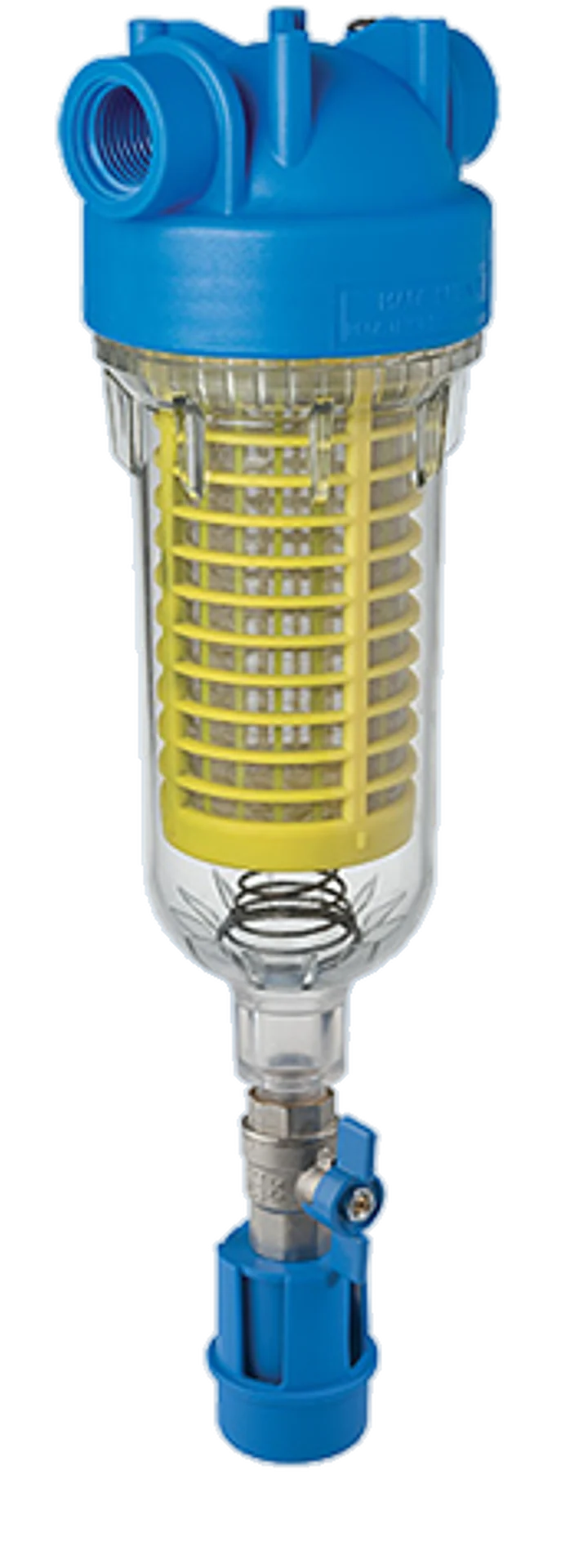
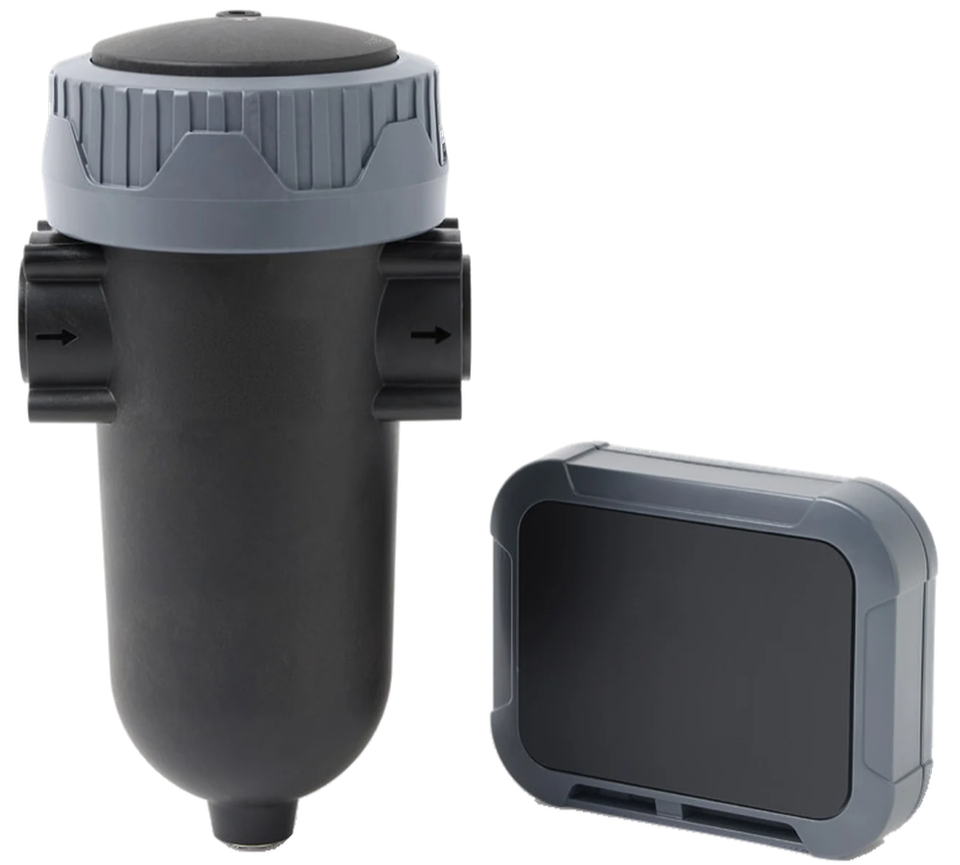
The UltraPre Filter is a self-cleaning sediment filter for the sand, scale and grit that come up from a well. Open the drain valve and it flushes itself clean from the inside of the cartridge out. One cartridge lasts for years, because you flush it instead of replacing it.
50 or 90 micron · up to 40 gpm · up to 125 psi
Works onSand and sediment
How it works and what it needs →02 · Catches iron before the filtersUltraShield Iron Filter
If neededOutlet and drain line
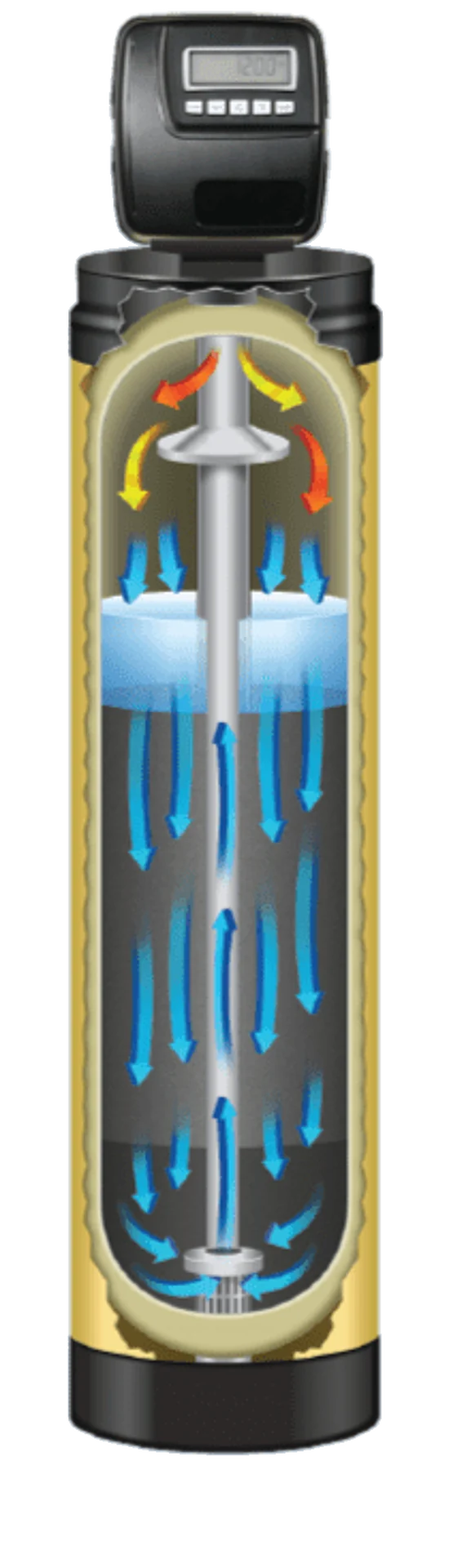
The UltraShield goes in when a well has iron, manganese, a sulfur smell or arsenic. A pocket of compressed air inside the tank turns them into particles that catalytic media catches, and on a schedule the tank backwashes them out and draws in fresh air. A built-in ozone generator cleans the media each cycle, with no chemicals. It meets the Water Quality Association's Gold Seal standards, and it needs an outlet and a drain line.
10 x 54 tank · up to 21 gpm · up to 4 baths
Works onIronManganeseSulfur smellArsenic
How it works and what it needs →03 · Whole-home filtration for wells3-Filter Well System
Standard
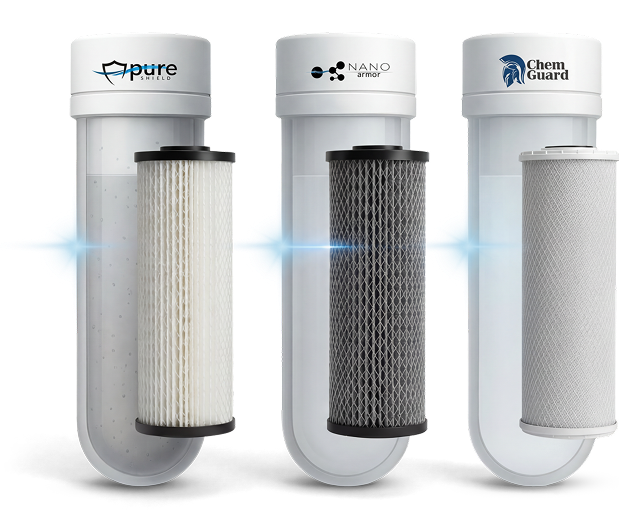
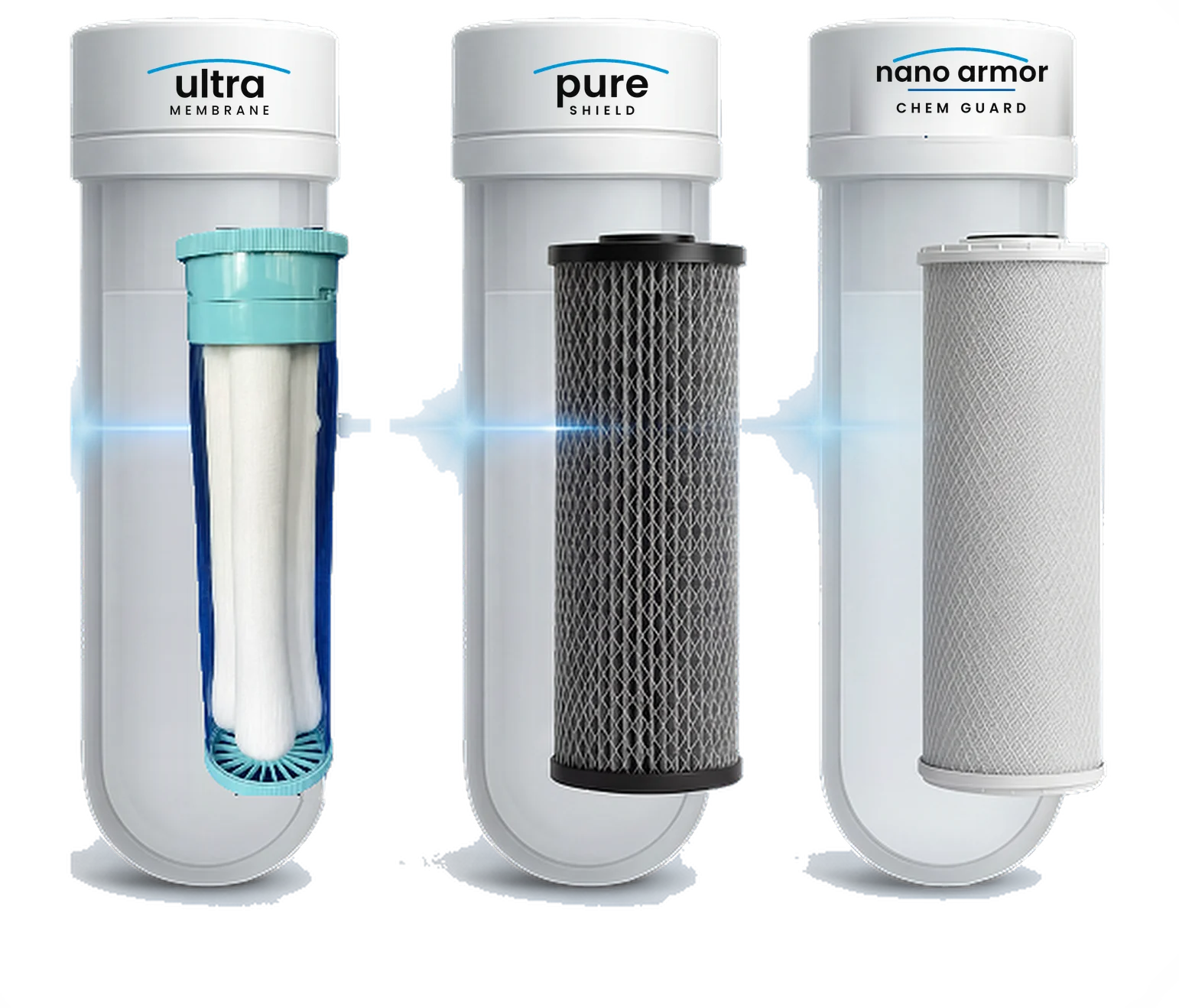
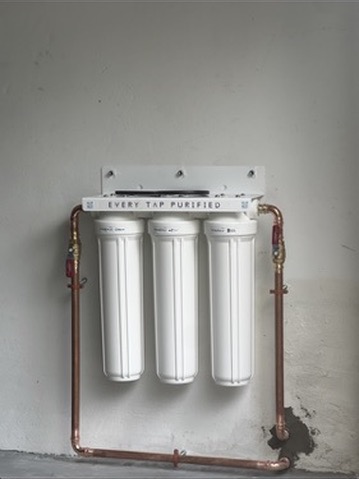
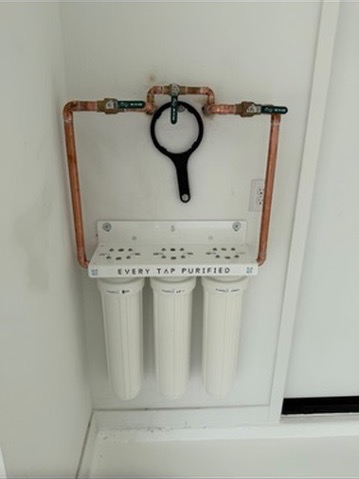
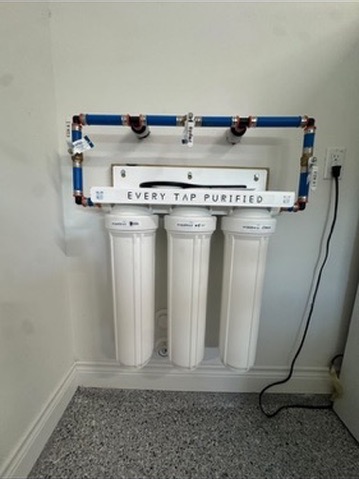
Three housings in a row. The Ultra Membrane takes out the fine, cloudy sediment that gets past the spin-down, then Pure Shield catches sediment and charged particles, and Nano Armor with Chem Guard holds ultra-fine particles and works on chlorine, taste and odor.
Works onFine particlesChlorineTaste and odor
How it works and what it needs →04 · Keeps hardness from scalingUltra Descaler
Standard
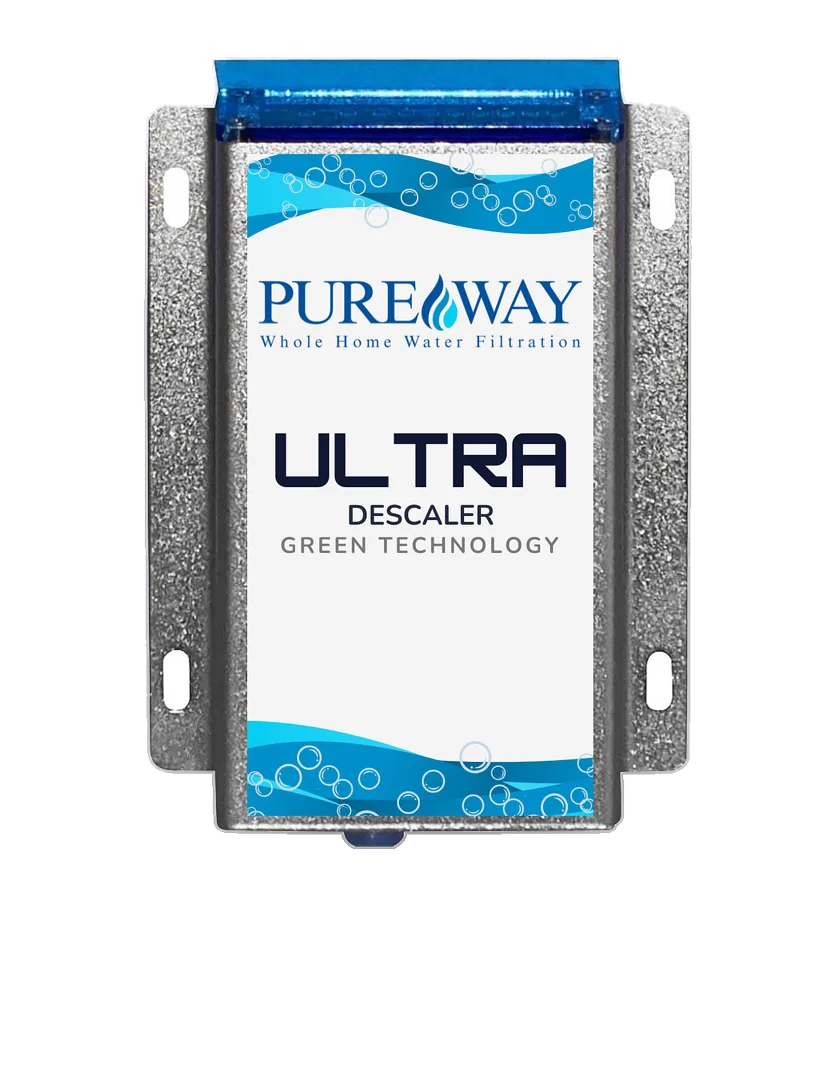
The Ultra Descaler goes on the main line. A control box sends a changing signal through a wire coiled around the pipe, designed to reduce scale in the water heater and the dishwasher. It needs an outlet and is not a salt softener. The UltraSafe SP3 does the same job another way: crystallization media turns hardness into tiny crystals that stay in the water, with no salt, power or backwashing.
SP3: 12, 16 or 22 gpm · up to 2, 4 or 6 baths
Works onScale from hard water
How it works and what it needs →05 · Treats the water for bacteriaUVC Disinfector
StandardPower connection
A polished stainless-steel reactor with a UV lamp that treats the water for bacteria and viruses, including E. coli, Cryptosporidium and Giardia. It goes last, right before the house plumbing, and it tracks lamp life with an audible and visual alarm. It needs a power connection, and the lamp swaps in a quarter turn.
6, 11, 15 or 21 gpm · 9,000 hour lamp
Works onBacteria
How it works and what it needs →06 · Drinking and cooking waterUltrasafe RO
If neededKitchen tap
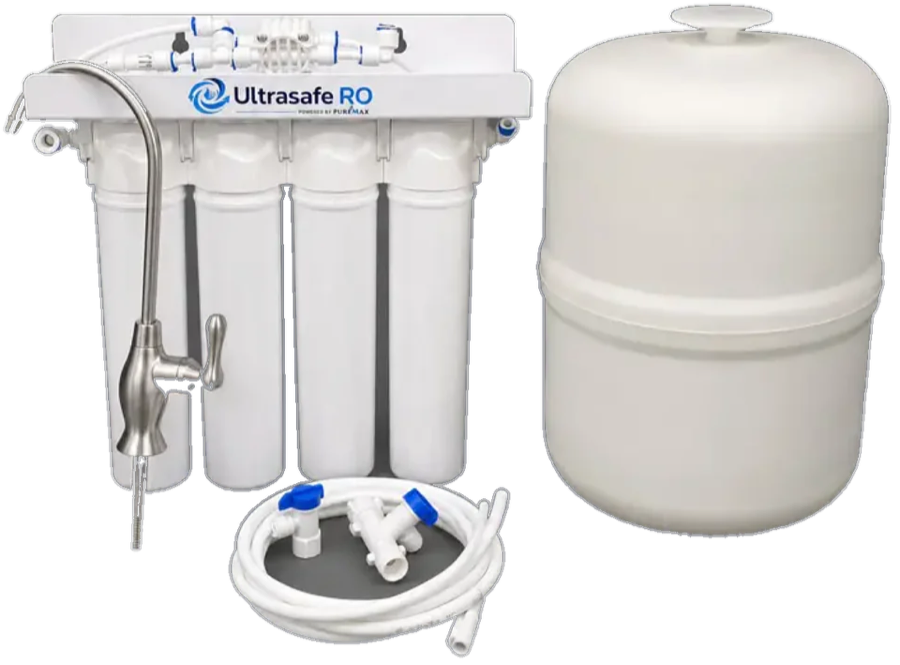
The add-on for arsenic and nitrate, and it also reduces fluoride and salts. It treats the water at the kitchen tap for drinking and cooking, up to 50 gallons a day, and can feed a refrigerator or ice maker too. A final alkaline stage raises the pH. Filters are changed at least yearly and the membrane every 36 months.
50 gallons a day · five stages · needs a drain line
Works onArsenicNitrateFluorideSalts
How it works and what it needs →Out to the houseEvery tap runs on treated water
The UV lamp is the last stop before the house plumbing, so every tap and the water heater run on treated water. When a kitchen tap is added, it gets its own line.
Treated water toKitchenBathroomsLaundryWater heater