Chem Guard, the third stage
A specialty activated carbon that works on chlorine, chloramine and the disinfection byproducts that affect taste and smell. The first two stages protect it by taking sediment and ultra-fine particles out first.

Town water has to stay disinfected all the way to your faucet, so some of the chlorine is still there when it arrives. Here is what each Shore utility reports and what reduces it.
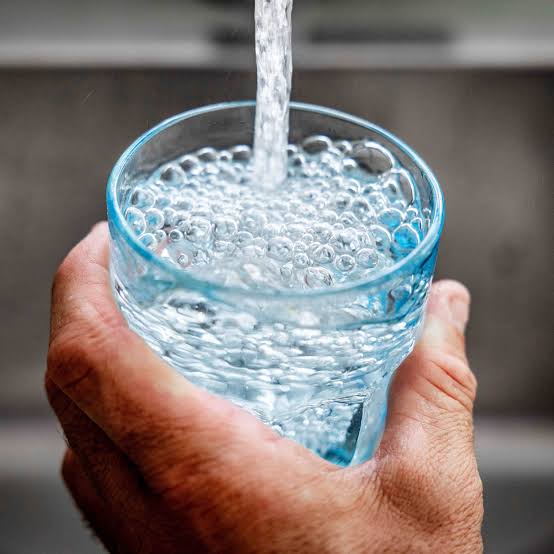
Utilities add chlorine so the water stays safe through miles of pipe. It is the most common reason people notice a swimming-pool smell or taste in town water, and it is a comfort issue, not a safety one.
Every system in our records reports a chlorine level under the 4 ppm legal limit, from 0.3 ppm highest running average in Sharptown to 2.6 ppm average in Trappe. None of the utility reports we read mention chloramine. Chem Guard, the third stage of the Pure Way system, is built to take chlorine, chloramine and the byproducts out before the water reaches your taps.
The disinfectant level each utility printed in its latest report, highest first, against the legal limit of 4 ppm.
| Town or system | County | Chlorine reported | Legal limit |
|---|---|---|---|
| Trappe | Talbot | 2.6 ppm average | 4 ppm |
| Pocomoke City | Worcester | 1.8 ppm highest (range 1.5 to 1.8) | 4 ppm |
| Vienna | Dorchester | 1.5 ppm highest (range 0.1 to 1.89) | 4 ppm |
| Jonestown Community Water System | Caroline | 1.4 ppm highest (range 0.19 to 1.38) | 4 ppm |
| Oxford | Talbot | 1.3 ppm | 4 ppm |
| Denton | Caroline | 1.3 ppm highest | 4 ppm |
| Henderson | Caroline | 1.3 ppm highest (range 0.90 to 1.30) | 4 ppm |
| Martingham Utilities Cooperative | Talbot | 1.26 ppm rolling average | 4 ppm |
| Secretary | Dorchester | 1.2 ppm | 4 ppm |
| Grasonville | Queen Anne's | 1.2 to 1.6 ppm | 4 ppm |
| Prospect Bay | Queen Anne's | 1.2 to 1.5 ppm | 4 ppm |
| Oyster Cove | Queen Anne's | 1.2 ppm | 4 ppm |
| Ocean Pines Service Area | Worcester | 1.11 ppm highest (range 0.8 to 1, as printed) | 4 ppm |
| Bayview at Kent Narrows | Queen Anne's | 1.1 ppm highest | 4 ppm |
| Snow Hill | Worcester | 1.1 ppm highest | 4 ppm |
| Greensboro | Caroline | 1.0 to 1.3 ppm | 4 ppm |
| Preston | Caroline | 1.0 ppm | 4 ppm |
| Ridgely | Caroline | 1.0 ppm highest (range 0.5 to 1.0) | 4 ppm |
| Salisbury | Wicomico | 1.0 ppm | 4 ppm |
| Newark Service Area | Worcester | 1.0 ppm | 4 ppm |
| Bonnie Brook | Dorchester | 0.97 ppm | 4 ppm |
| Hurlock | Dorchester | 0.9 ppm highest (range 0.2 to 1.64) | 4 ppm |
| Federalsburg | Caroline | 0.9 ppm highest (2024) | 4 ppm |
| Easton Utilities | Talbot | 0.8 ppm highest running average | 4 ppm |
| Stevensville system (Queen Anne's County Sanitary District) | Queen Anne's | 0.8 to 1 ppm | 4 ppm |
| Fruitland | Wicomico | 0.8 ppm highest | 4 ppm |
| Delmar Utility Commission (Maryland side) | Wicomico | 0.8 ppm | 4 ppm |
| East New Market | Dorchester | 0.7 ppm average (range 0.3 to 1.52) | 4 ppm |
| Pittsville | Wicomico | 0.7 ppm | 4 ppm |
| St. Michaels | Talbot | 0.6 ppm | 4 ppm |
| Centreville | Queen Anne's | 0.6 ppm highest | 4 ppm |
| Ocean City | Worcester | 0.6 ppm (range 0.06 to 1.25) | 4 ppm |
| Berlin | Worcester | 0.6 ppm highest detected (range 0.1 to 1.8) | 4 ppm |
| Cambridge | Dorchester | 0.5 ppm average (range 0.1 to 1.1) | 4 ppm |
| Hebron | Wicomico | 0.5 ppm | 4 ppm |
| Sharptown | Wicomico | 0.3 ppm highest running average | 4 ppm |
Source: each utility's annual water quality report, read for this site. Private wells have no disinfectant unless the owner adds one.
Chlorine reacts with natural organic matter to form trihalomethanes. These are the six highest we found, against the 80 ppb limit.
| Town or system | County | TTHM reported | Legal limit |
|---|---|---|---|
| Snow Hill | Worcester | 74 ppb highest (samples up to 104.1) | 80 ppb |
| Pittsville | Wicomico | 69 ppb annual average (samples 43.9 to 81.5) | 80 ppb |
| Pocomoke City | Worcester | 64 ppb highest (samples 8 to 87.2) | 80 ppb |
| Ocean City | Worcester | 57 ppb running average (samples ND to 91.2) | 80 ppb |
| Sharptown | Wicomico | 55 ppb highest local average (samples 12 to 107) | 80 ppb |
| Oyster Cove | Queen Anne's | 46.6 ppb (one sample, August 2025) | 80 ppb |
Every system we read is under the limit. Haloacetic acids (HAA5, limit 60 ppb) are on each town page.
Chlorine does its job on the way to your house. The third stage of the system reduces it before it reaches a tap.
A specialty activated carbon that works on chlorine, chloramine and the disinfection byproducts that affect taste and smell. The first two stages protect it by taking sediment and ultra-fine particles out first.
The system goes where the main enters the house, so the shower, the washer, the water heater and the kitchen tap all get the same treated water. No outlet, no salt, no drain line.
Chlorine reduced by more than 99.1%, chloramine by more than 99.6%, TTHMs by more than 99.93% and HAA5 by more than 98.7%, under challenge conditions. See the conditions.
We test the water at your tap, in your home, at no cost. Tell us where you are and what kind of water you have, and we will call you to set a time. No obligation.
Rather talk now? Call (410) 431-0822.
Utilities add chlorine so the water stays safe all the way through miles of pipe, and some of it is still there when the water reaches your tap. The smell is strongest in the first glass of the morning and in a hot shower, and it can get stronger when the utility flushes its pipes.
Every Shore system in our records reports a chlorine level under the 4 ppm legal limit. For most people it is a taste, smell and comfort issue, not a safety one. What you do about it is a preference.
Chlorine bonded with ammonia. It lasts longer in the pipes and tends to form fewer byproducts, but it is harder to remove. None of the reports we read for the Shore mention chloramine, and they report chlorine, but your utility can confirm which it uses.
Compounds formed when chlorine reacts with natural organic matter in the water. The rules regulate two groups, trihalomethanes (TTHM, limit 80 ppb) and haloacetic acids (HAA5, limit 60 ppb), and utilities report them each year.
Chem Guard, the third stage, is a specialty activated carbon that works on chlorine, chloramine and the byproducts that affect taste and smell. In independent lab testing under challenge conditions, the town-water system reduced chlorine by more than 99.1%, chloramine by more than 99.6%, trihalomethanes by more than 99.93% and HAA5 by more than 98.7%. Results depend on your water. See the lab results.
That is where most people notice the difference, because the carbon takes the chlorine out before the water reaches any tap.
Usually not. The kitchen tap is downstream of the same three stages as every other tap.